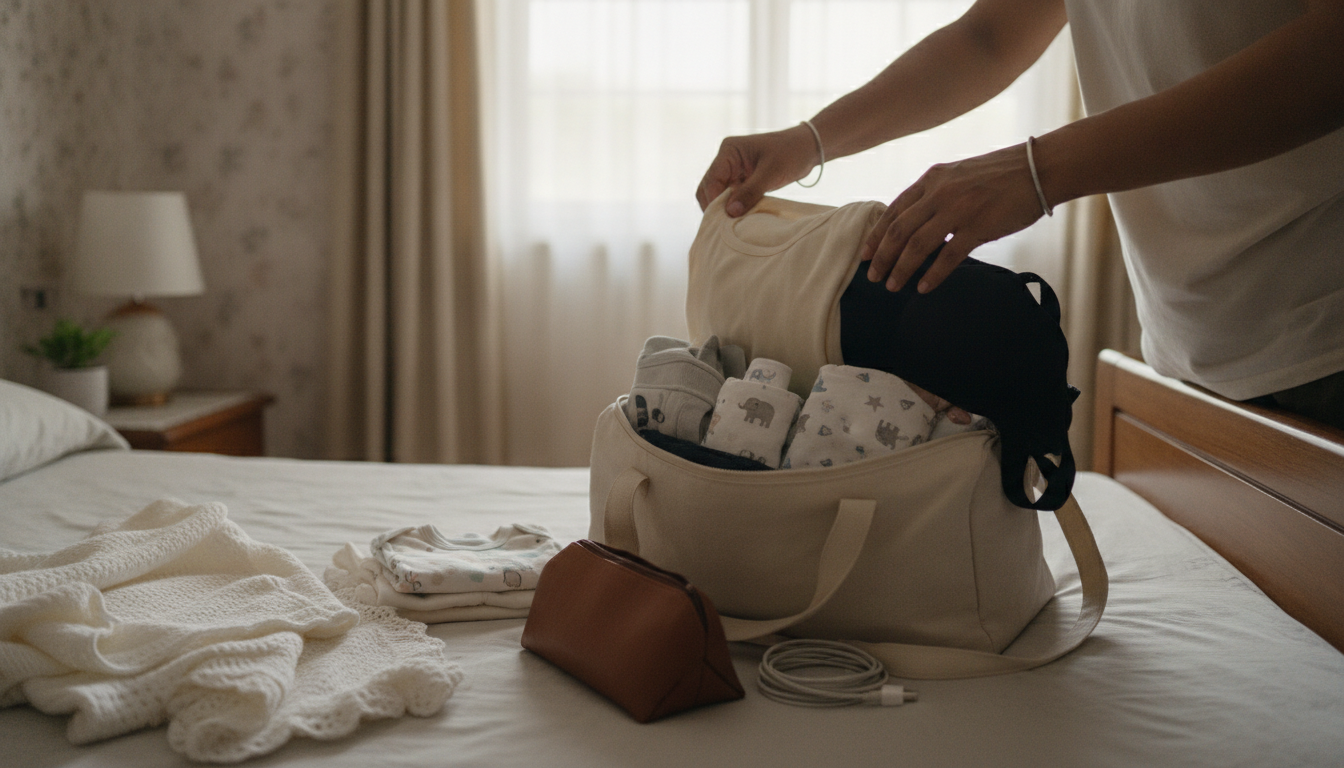
Getting a hospital bag ready can make the last weeks of pregnancy feel more manageable. The exact list depends on your maternity hospital, planned length of stay, delivery circumstances and personal preferences, so use this guide as a starting point and confirm the details with your hospital.
A useful rule of thumb is to have the bag ready around 34–36 weeks of pregnancy, or earlier if your doctor advises it or there is a possibility of early delivery. NHS maternity guidance similarly suggests preparing around 36 weeks. Read the hospital’s packing guidance. In India, birth preparation also includes keeping pregnancy records accessible and planning how you will get to the facility. India’s skilled-birth guidance discusses carrying the Mother and Child Protection Card and planning transport.
Start by checking with your maternity hospital
Before buying supplies, ask your hospital or maternity unit what it expects you to bring and what it supplies. Policies differ between public and private hospitals, and even between wards. Ask about visitor or birth-partner rules, length of stay, newborn nappies and clothes, towels, sanitary pads, feeding supplies, meals for the partner, and whether a car seat is needed or relevant for your journey home.
Keep the list practical. A short stay may need fewer changes of clothes than an unexpected longer stay. A family member can often bring extra items later, if that is feasible.
Important documents and information
- Government-issued photo ID for the pregnant parent and, if requested, the accompanying adult.
- Pregnancy records: antenatal notes, test and scan reports, blood group information if documented, and your Mother and Child Protection Card (MCP card).
- Hospital registration or admission details, appointment information, and any birth preferences or care plan you have discussed with your clinician.
- Insurance card or policy details, pre-authorisation documents if applicable, and the insurer or employer’s contact information.
- A current list of medicines, allergies and relevant medical conditions. Bring prescribed medicines in their original packaging if the hospital asks you to; tell the clinical team what you take.
- Emergency contacts, hospital contact number, and payment method or required deposit information.
Put important papers in a labelled folder that is easy for your partner to find. The Indian Ministry of Health and Family Welfare guidance says the MCP card should be carried at the time of delivery; confirm which other records your own hospital needs. See the Government of India birth-preparedness guidance.
Mother’s bag: comfort and recovery
- Clothes: two or three loose, comfortable changes, depending on the hospital’s expected stay. Front-opening nightwear or tops can make breastfeeding access easier if you choose to breastfeed.
- Bras and pads: one or two comfortable bras, including nursing bras if useful, and breast pads if you want them. Pack maternity pads and comfortable underwear; ask whether the hospital supplies either.
- Footwear: slippers or sandals that are easy to put on and have a secure sole.
- Toiletries: toothbrush, toothpaste, soap or body wash, shampoo, deodorant, hairbrush and hair ties. Add any personal-care items you use regularly.
- Other comforts: phone and charger, water bottle if permitted, glasses or contact-lens supplies, and a small towel if the hospital recommends bringing one.
- Going-home clothes: choose loose clothes that feel comfortable around your abdomen and suit the weather. They do not need to be pre-pregnancy clothes.
Pack only what you expect to use, and check the hospital’s rules about personal bedding, towels and food. One NHS hospital’s list, for example, suggests pads, toiletries, nightwear, slippers and a comfortable going-home outfit, while noting that lists are suggestions rather than universal requirements. See its full list.
Newborn bag: a small, useful set
- Two or three clean newborn outfits, such as soft vests and sleepsuits. Babies vary in size, so one size may not fit every newborn.
- A weather-appropriate going-home outfit and a light blanket or shawl for the journey, as appropriate.
- A few nappies or diapers, if the hospital asks you to bring them, plus cotton wool or baby wipes if permitted.
- A soft towel or muslin cloth, only if requested or useful for your hospital.
- A cap, socks and mittens only if suitable for the conditions and your hospital’s advice. Avoid over-bundling; ask staff how to dress your baby in the ward’s temperature.
- An infant car seat if you will travel home by car and local rules or your hospital require it. Ask how and when to bring it in.
Keep one outfit and a nappy near the top of the bag so they are easy to find. Avoid packing lots of newborn accessories: the hospital may provide some essentials, and a newborn’s needs are simpler than a full suitcase suggests.
Feeding and breastfeeding support
If you plan to breastfeed, consider packing a comfortable bra and front-opening clothes. You can also ask the hospital whether a lactation consultant or trained feeding support is available and how to request help with positioning and attachment. Breast pumps, nipple creams, feeding pillows and breast pads are not automatically necessary for every family; ask your care team before purchasing items or packing equipment.
Ask the hospital what it provides if feeding support or supplementation is medically needed. Do not assume that formula, bottles or preparation facilities are supplied—or that you need to bring them. Follow your maternity team’s advice for your individual situation. Government of India guidance encourages early breastfeeding and advises against pre-lacteal feeds; discuss questions or feeding difficulties with your clinical team rather than relying on family rumours or self-directed substitutes. Read the relevant Indian guidance.
Birth partner’s bag
- Photo ID and any documents the hospital asks the partner to show.
- A change of comfortable clothes, toiletries and slippers or indoor footwear.
- Phone, charger and any necessary medication.
- Water and snacks, if permitted. Do not assume the partner will receive hospital meals.
- Cash or payment method, transport details, and a note of useful contact numbers.
Tell your partner where the documents and bags are. If hospital access rules change or only one companion is permitted, a familiar packing plan makes it easier to adapt.
Normal delivery and C-section: what may differ
You may not know in advance whether you will have a vaginal birth or a caesarean birth, and plans can change for clinical reasons. The same basic bags are useful in either case. For a planned C-section, ask the hospital about admission timing, any instructions about eating or drinking, medication, and what clothing or personal items are allowed. Do not follow generic fasting or medication instructions in place of your own team’s directions.
After a C-section, you may need extra time in hospital and help moving around at first. Consider packing an additional loose outfit and underwear that will not press on the incision, but confirm the expected stay with your clinician. ACOG notes that breastfeeding may begin soon after delivery if mother and baby are doing well, and advises discussing breastfeeding plans with the obstetrician before surgery. Read ACOG’s caesarean birth information.
Example 1: A family planning birth at a city hospital can call ahead to check whether newborn nappies, towels and maternity pads are supplied, then pack only the items the ward requests.
Example 2: If grandparents will bring extra items from home, the birth partner can keep the first-change baby outfit and the parent’s documents in an easy-to-reach bag, with the remaining supplies packed separately.
What is often unnecessary or provided
There is no universal “provided by every hospital” list. Some facilities supply items such as towels, basic newborn supplies or maternity pads; others ask families to bring them. Check directly before leaving out something important.
Often unnecessary unless your hospital or clinician specifically requests them: large quantities of clothes or nappies, multiple blankets, expensive baby gadgets, a breast pump for routine use, jewellery or valuables, and medicines or feeding products chosen without guidance. Keep bags compact; ward space may be limited.
How to organise the bags
- Mother’s bag: documents folder, clothes, pads, toiletries and personal items.
- Baby’s bag: first-change outfit at the top, then any requested nappies, cloths and going-home clothes.
- Partner’s bag: documents, charger, change of clothes, toiletries and permitted snacks.
Label bags and small pouches. Put the hospital address, contact number, route and transport plan somewhere both adults can access. Keep the bags in a known place and tell the person who may accompany you how they are arranged.
Practical checklist
Tick the items you need after checking your hospital’s own list.
- □ ID, antenatal records, MCP card and hospital registration details
- □ Insurance details, prescriptions or medicine list, allergies and emergency contacts
- □ Mother’s comfortable clothes, nightwear, bras and going-home outfit
- □ Maternity pads, underwear, toiletries and slippers
- □ Phone and charger
- □ Baby outfits, going-home clothes and any hospital-requested nappies or cloths
- □ Blanket or shawl and weather-appropriate layers, if advised
- □ Partner’s ID, clothes, toiletries, charger and permitted snacks
- □ Transport plan, hospital contact number and any requested payment documents
- □ Hospital-confirmed feeding supplies, if any
Exceptions and when this does not apply
This is a general packing guide, not a hospital policy or medical plan. Requirements may differ for a public or private facility, planned admission, multiple birth, premature birth, special medical needs, local transport and the expected length of stay. If your clinician has given different instructions, follow those and contact the maternity unit with questions.
When to seek professional help
Use your maternity team for pregnancy concerns, questions about a planned C-section, medicines, feeding plans or what to bring for a baby who may need extra care. If you have urgent symptoms or are worried that you or your baby need immediate assessment, contact your maternity unit or local emergency service rather than waiting to finish packing.
Frequently asked questions
When should I pack my hospital bag?
A practical target is around 34–36 weeks, or earlier if your doctor advises it or early delivery is a concern. Keep it ready once packed.
How many outfits should I pack for the baby?
Start with two or three simple outfits, plus a going-home outfit. Ask the hospital about its expected stay and what it supplies.
Should I bring formula and bottles?
Ask your maternity hospital what it provides and what it recommends for your situation. Do not assume supplies or preparation facilities are available, and follow your care team’s feeding advice.
What should I pack for a C-section?
Use the same core list, then ask your team about admission instructions and likely stay. Loose clothing that does not press on the incision may be more comfortable.
Do hospitals provide nappies and towels?
Some may, but provision varies. Call your specific hospital and follow its current checklist.
Can my birth partner stay with me?
Rules vary by hospital and may change. Confirm visitor, companion and overnight arrangements before admission.
A small, organised bag and a quick call to your maternity hospital can prevent last-minute uncertainty. For the most accurate list, use the facility’s instructions alongside this checklist.
Looking for childcare that fits your family's schedule? Explore Zipnny nanny services and download the app to book an available slot.
Related reading
This article is general information for families in India. It is not a medical diagnosis. Follow your paediatrician’s advice for your child.