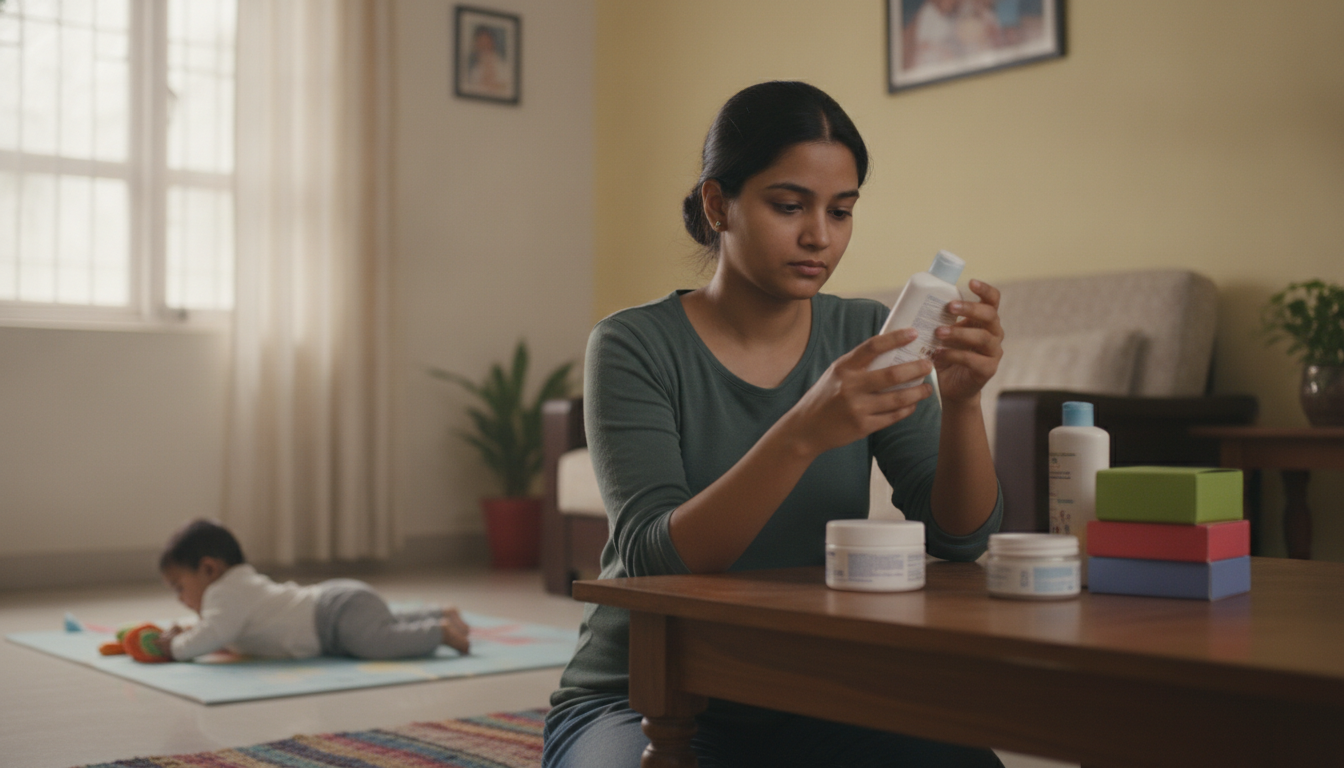
Premium pricing, “organic” wording and earthy packaging can make a baby product look like the safest choice. But those signals do not, by themselves, establish that a product is suitable for your child. In India, a more useful approach is to check what the product is for, whether it meets any applicable safety requirements, how it will be used and cared for, and whether its environmental claims are specific and verifiable.
This guide offers a practical way to compare products without treating “natural,” “eco-friendly” or “baby-safe” as guarantees. Product rules vary by category, and this is general information—not a certification of any product or brand.
Start with the product’s purpose, not its price
Consider the item’s intended use and the child’s age. A toy, feeding item, sleep product, skin lotion and cleaning product each raise different questions. A product that is appropriate for one use may not be appropriate for another; for example, a seat or rocker is not automatically a safe place for an infant to sleep.
Check the manufacturer’s instructions, age guidance, warnings, cleaning directions and any stated limits. Avoid products with missing or unclear instructions, damaged parts, loose components, sharp edges or cords that could create a hazard. Inspect items again after regular use, since wear and damage can change their condition.
What “organic,” “natural” and “baby-safe” do—and do not—mean
“Natural” is not a universal safety standard. A product’s ingredients and intended use matter more than a broad marketing phrase. The US Environmental Protection Agency explains that “natural” cleaning-product ingredients can still have health and environmental effects; the word alone does not establish that a product is safer. Source: US EPA guidance on Safer Choice labels and “natural” claims
Similarly, an organic claim usually refers to how specified agricultural ingredients were produced under a certification system. It does not automatically establish that a finished item is suitable for every baby, will not cause irritation, or is safer in every respect. Be especially careful not to assume that an organic label on a food, textile or ingredient verifies every other aspect of the product.
For organic food sold in India, FSSAI’s Jaivik Bharat guidance describes the logo and certification systems. Check the label and certification details rather than relying on a product name or green-coloured packaging. Source: FSSAI Jaivik Bharat consumer guidance
For toys, check the applicable Indian safety mark
Toys are a category where Indian requirements are particularly important. A Government of India release explains that toys covered by the Toys Quality Control Order must conform to applicable Indian Standards and bear the BIS Standard Mark (ISI Mark) under a BIS licence. The standards address areas that include physical and mechanical hazards, flammability, certain chemical limits and electrical safety. Source: Press Information Bureau, Government of India, on toy safety standards
When buying a toy, look for the required mark and check that product details and warnings are legible. Do not assume a toy is compliant just because it is sold online, is expensive, or is described as handmade or imported. If the mark or information is unclear, check with the seller or consult BIS information before purchasing.
This toy-specific rule should not be generalized to every baby product. BIS certification is mandatory for some products and voluntary for others; the applicable requirement depends on the product category and current rules. Source: BIS information on products under compulsory certification
Choose personal-care products thoughtfully
For lotions, washes and other products used on a baby’s skin, read the ingredient list and use the item only as directed. AAP environmental-health guidance advises families to check children’s personal-care product ingredients and notes fragrance-free products as an option for those who prefer to avoid fragrances. That guidance does not mean every fragranced product causes harm or that “fragrance-free” prevents all reactions. Source: American Academy of Pediatrics guidance on personal-care products
Choose a simple product suited to the intended use, avoid applying products near a baby’s eyes or mouth unless directed, and keep containers out of children’s reach. If your child has sensitive skin, a known allergy or a skin condition, ask a healthcare professional about suitable options rather than relying on “hypoallergenic” or “clean” wording alone.
Think about sustainability in practical terms
Sustainable choices may include durable items that can be safely reused, products with repair or replacement parts, and packaging that uses fewer materials. Reuse can reduce waste, but it should never override product condition, hygiene, current safety instructions or a child’s age and stage. Check for recalls or damage and follow any manufacturer limits on second-hand use.
Consider the whole use cycle: how often the product will be used, how it must be cleaned, whether it is likely to last, and how it can be responsibly disposed of. “Biodegradable,” “plastic-free” or “eco-friendly” claims are more useful when the seller explains what material or component the claim covers and under what conditions it applies.
Two examples from everyday family life
Example 1 — Buying a toy in a local market: A family comparing two colourful toys checks the age guidance, product information and required ISI mark rather than choosing solely by price or an “eco” label. If the information is missing or hard to verify, they ask the seller or choose another product.
Example 2 — Comparing baby wash online: A parent sees one product described as “natural” and another with a clear ingredient list and directions. They compare the actual information and intended use, choose a product that suits their family, and avoid treating the marketing phrase as proof of safety.
Practical checklist
- Identify the product’s purpose and check age guidance and warnings.
- Read the instructions, ingredients where applicable, and cleaning requirements.
- For toys, check for the required BIS Standard Mark and product details.
- For organic food, look for the relevant certification information and Jaivik Bharat label guidance.
- Do not equate “premium,” “natural,” “organic” or “eco-friendly” with a universal safety guarantee.
- Inspect products for damage, loose parts, sharp edges or unclear instructions.
- For second-hand items, consider condition, hygiene, age suitability and manufacturer limits.
- Keep personal-care products, medicines and small components out of children’s reach.
Exceptions and when this does not apply
Product rules and certification marks differ by category and can change. Toy requirements should not be assumed to apply identically to clothing, cosmetics, feeding equipment or furniture. Organic certification concerns defined production and processing requirements; it is not a promise about every possible safety or environmental feature of a finished product.
Some babies have allergies, eczema, medical needs or developmental circumstances that call for individualized advice. A general shopping checklist cannot determine whether a particular product is appropriate for a particular child.
When to seek professional help
Ask your child’s doctor or another relevant healthcare professional if a product has caused a rash, breathing difficulty, swelling, choking episode, burn or other concerning reaction. Seek urgent medical care for severe symptoms such as difficulty breathing or loss of consciousness. For suspected poisoning or exposure to a hazardous substance, contact local emergency services or a poison information service where available; do not wait for an online answer.
If you are unsure whether a sleep product or other item is appropriate for your baby, consult a qualified clinician and follow current official guidance and the product’s instructions. This article does not replace individualized medical or emergency advice.
Frequently asked questions
Are premium baby products safer?
Not necessarily. Price is not proof of compliance, suitability or safety. Check the product category, applicable requirements, instructions and condition.
Does “natural” mean a baby product is safe?
No universal safety conclusion follows from that word alone. Check the ingredients, intended use, directions and relevant certification or regulatory information.
How can I check whether a toy meets Indian requirements?
Look for the applicable BIS Standard Mark (ISI Mark) and clear product details. Government guidance says toys covered by the Toys Quality Control Order must meet the applicable Indian Standards and bear the mark under a BIS licence.
Does organic food mean it is automatically better for my baby?
Organic describes production and certification requirements; it does not alone determine whether a food is age-appropriate or meets your child’s nutritional needs. Follow age-appropriate feeding guidance and consult a clinician about individual concerns.
Can I reuse a baby product to reduce waste?
Sometimes, if it is in good condition, appropriate for the child and safe to reuse under the manufacturer’s instructions. Do not reuse an item if you cannot verify its condition or suitability.
Is fragrance-free the same as allergy-proof?
No. Fragrance-free may be a preference or consideration, but it does not guarantee that a product will not cause irritation or an allergic reaction.
Choose evidence over packaging
For Indian families, a sensible purchase is one that fits the child’s age and needs, follows the applicable product requirements and comes with clear, usable instructions. Compare evidence and product details—not just premium pricing or reassuring language—and ask a professional when your child’s individual health needs make the choice uncertain.
Looking for childcare that fits your family's schedule? Explore Zipnny nanny services and download the app to book an available slot.
Related reading
This article is general information for families in India. It is not a medical diagnosis. Follow your paediatrician’s advice for your child.