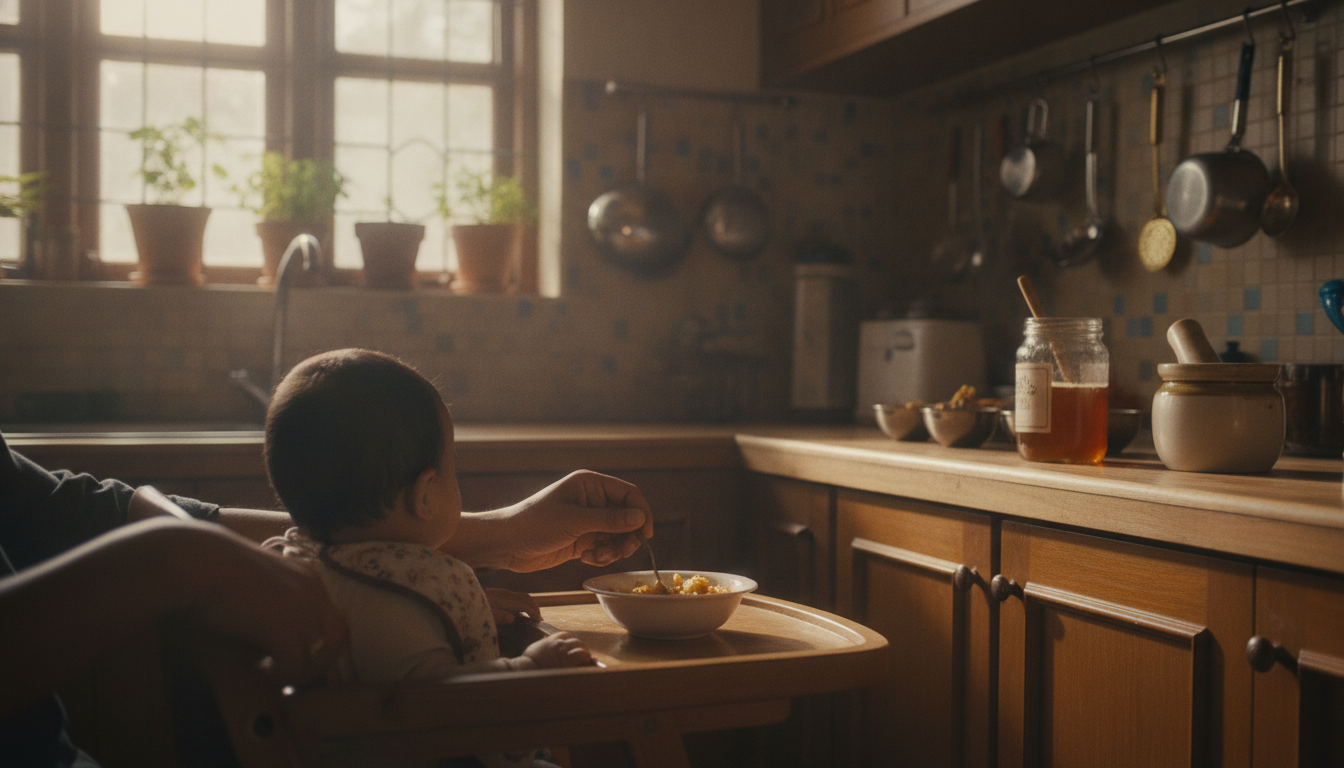
Honey may seem like a natural way to sweeten a baby’s food, but it is not suitable for children younger than 12 months. It can contain Clostridium botulinum spores, which may grow in an infant’s intestine and produce a toxin that causes infant botulism. Avoid honey and foods containing honey throughout the first year, including honey added to a recipe. This article explains what to check, how to introduce other flavours and what to do if a baby accidentally eats honey.
CDC guidance: foods and drinks to avoid or limit and NHS guidance on botulism advise against giving honey before 12 months.
What is infant botulism?
Botulism is a rare but serious illness. In infant botulism, a baby swallows bacterial spores; in some infants, the spores can grow in the intestine and produce a toxin that affects the nerves and muscles. Honey is an identified food source of these spores, but not every jar contains them and not every baby exposed to honey becomes ill. The recommendation to avoid honey is a prevention measure, not a reason to assume a baby is ill after a taste. California Department of Public Health infant botulism FAQs
Infant botulism can cause constipation, poor feeding, a weak or unusual cry, reduced activity, and loss of muscle tone or head control. These signs can have other causes too; only a health professional can assess a baby. If you notice concerning symptoms, seek medical advice promptly. NHS: symptoms and urgent action for botulism
Which foods and products should parents check?
Do not give a baby younger than 12 months honey directly or add it to food, water, formula or a pacifier. Check ingredient lists for honey in foods such as cereals, rusks, biscuits, breads, sauces, marinades or other packaged products. These are examples of places honey may appear, not a claim that every product in those categories contains it. If a packaged food lists honey, choose a different option for a child under one.
Some caregivers wonder whether baking or cooking makes honey safe. Manufacturing and preparation methods vary, and families cannot reliably establish from a label whether a honey-containing product is safe for an infant. The cautious choice is to avoid honey-containing foods throughout the first year. CDPH notes that processes vary and it cannot determine whether a particular product contains the bacteria. CDPH: commercial products containing honey
Honey consumed by a breastfeeding parent is not the same as feeding honey to the baby. CDPH says botulism is not transmitted through breast milk. Caregivers who handle honey can wash their hands and clean surfaces or utensils before they prepare or serve the baby’s food. CDPH: honey and breastfeeding
How to add flavour without honey
Honey is not needed to help a baby explore food. WHO recommends starting complementary foods at around six months, alongside continued breastfeeding, and gradually increasing food variety and texture as the child grows. It also advises that salt and sugars should not be added to complementary foods. WHO complementary-feeding guidance
- Offer age-appropriate versions of familiar family foods, such as well-cooked vegetables, lentils, grains and fruit, prepared with suitable texture and without added honey.
- Let a baby experience the natural taste of foods such as mashed banana, pear, pumpkin or plain yoghurt where appropriate for the child’s age and dietary needs.
- Introduce new foods in safe textures and supervise eating. Avoid foods that pose a choking risk.
- Use herbs or mild spices in family food if suitable, while keeping the preparation appropriate for the baby and following any individual advice from a health professional.
These are examples, not a required menu. Babies differ in readiness, allergies, dietary needs and feeding skills. A health professional can advise on an individual child’s nutrition.
Examples for everyday situations
Example 1: A family in Pune offers a baby who has started complementary foods some soft mashed dal and vegetables. A relative suggests adding honey for sweetness. The caregiver can explain that honey is avoided until after the first birthday and offer the food without it.
Example 2: A parent in Bengaluru buys packaged rusks for a baby. Instead of relying on the product name or an assumption that baking removes the concern, the parent checks the ingredients and chooses a product without honey.
Practical checklist
- Do not give honey to a baby younger than 12 months.
- Check ingredient labels and avoid foods listing honey during the first year.
- Do not add honey to a baby’s food, drink, formula or pacifier.
- Offer a variety of age-appropriate foods without added honey, salt or sugar.
- Share the rule with family members and anyone who feeds the baby.
- If honey was accidentally given, contact the baby’s doctor or local medical service for advice, particularly if the baby develops symptoms.
Exceptions and when this does not apply
This advice concerns feeding honey to children younger than 12 months. After the first birthday, honey is no longer covered by this infant-specific restriction, but it is still a sugar and is not necessary in a child’s diet. This general information does not replace advice for a baby with particular medical, allergy, feeding or developmental needs.
Accidental exposure does not mean a baby will develop botulism. Do not try to diagnose the illness or give a home treatment based on this article. If you are unsure what the product contained or how much was eaten, contact a qualified health professional for advice.
When to seek professional help
If a baby who may have eaten honey develops constipation together with poor feeding, unusual weakness, a weak cry, unusual sleepiness or a floppy appearance, contact a medical professional urgently. Botulism needs prompt assessment and hospital treatment; do not wait for symptoms to worsen. For severe symptoms or an emergency, use your local emergency service. The NHS lists limpness and suspected botulism as reasons for urgent action. NHS botulism symptoms and emergency advice
Frequently asked questions
Can a baby under 12 months have a tiny taste of honey?
No. Avoid giving honey at any amount before 12 months because it may contain botulism-causing spores. A small accidental taste is not proof that illness will occur, but ask a health professional if you have concerns.
Is honey in baked food safe for a baby?
Avoid foods containing honey during the first year, including baked or processed foods. CDPH says manufacturing processes vary and it cannot determine whether a particular product contains the bacteria.
Can a breastfeeding parent eat honey?
CDPH says botulism is not transmitted through breast milk, so a breastfeeding parent does not need to avoid honey for this reason. Keep hands and food-preparation surfaces clean before handling the baby’s food.
What can I use instead of honey to introduce flavour?
Honey is not needed. Offer a range of suitable, age-appropriate foods in safe textures, such as soft vegetables, fruit, grains and lentils, without adding sugar or salt to complementary foods.
What if my baby already ate honey?
Do not panic, but contact your baby’s doctor or a medical advice service for guidance, especially if symptoms appear. Seek urgent care for weakness, poor feeding, a weak cry, unusual sleepiness or floppiness.
Conclusion
Keep honey and honey-containing foods off the menu until your baby is at least 12 months old. During complementary feeding, variety and safe preparation matter more than sweetening foods. If exposure has occurred or symptoms concern you, get advice from a qualified health professional.
Looking for childcare that fits your family's schedule? Explore Zipnny nanny services and download the app to book an available slot.
Related reading
This article is general information for families in India. It is not a medical diagnosis. Follow your paediatrician’s advice for your child.