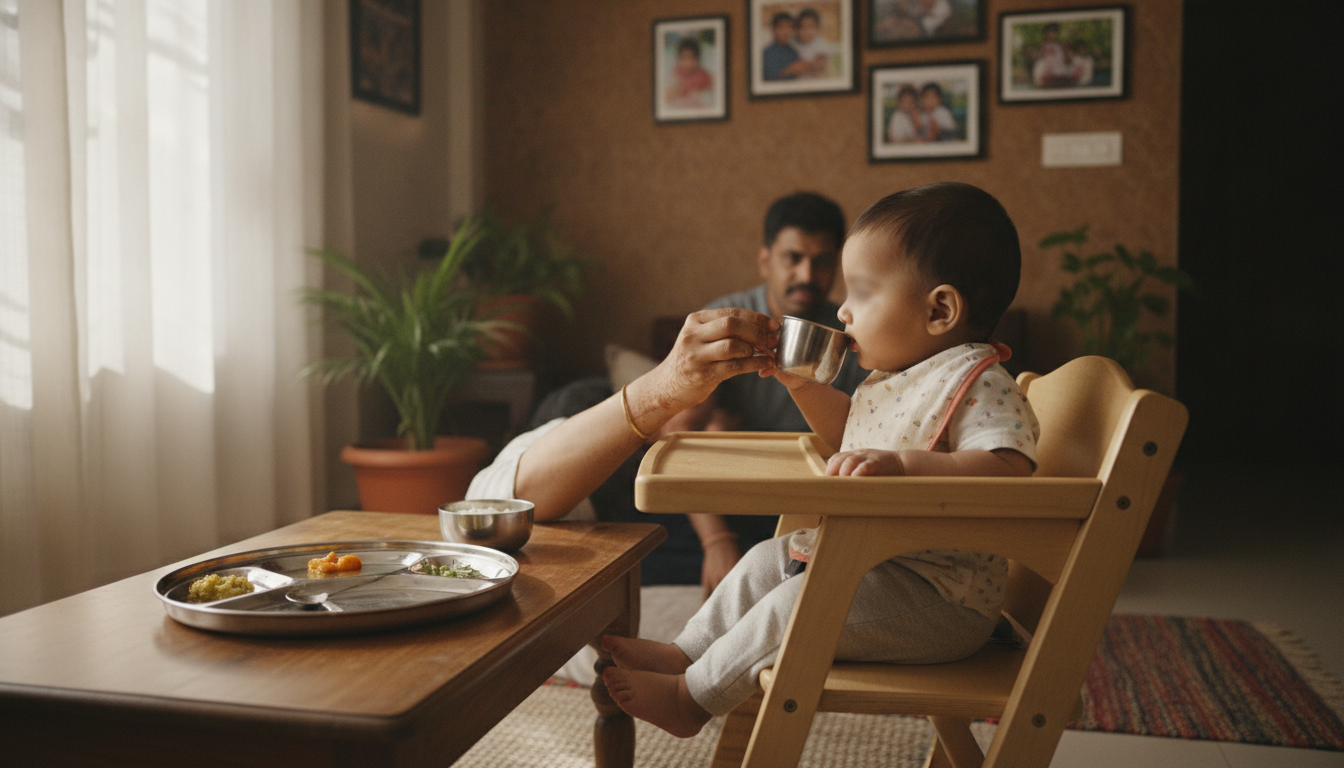
When a baby begins complementary foods at around six months, parents often wonder whether water should be added to the routine. In general, once solids start, you can offer small sips of safe drinking water with meals. Before six months, healthy babies generally should not be given plain water unless a health professional advises it. Throughout the first year, breast milk or correctly prepared infant formula remains a key source of nutrition and fluid. The exact amount of water can vary; it should not replace milk feeds.
This is general information, not individual medical advice. Your baby’s clinician can advise if your child was born prematurely, has a medical condition, or has specific feeding or hydration needs.
Before six months: usually no plain water
WHO and UNICEF recommend exclusive breastfeeding for the first six months. This means no other food or drink, including water, except for specific medical needs such as prescribed medicines or oral rehydration solution. WHO explains that complementary foods are introduced from around six months while breastfeeding continues. Source: WHO infant and young child feeding guidance
India’s National Health Mission guidance also describes exclusive breastfeeding for the first six months and says not to give other fluids, including water, unless medically indicated. The National Institute of Nutrition’s 2024 dietary guidelines likewise say exclusively breastfed infants do not need water, including in hot weather. Source: National Health Mission IYCF guidance; Source: ICMR–National Institute of Nutrition Dietary Guidelines for Indians 2024
For a baby who drinks formula, prepare it exactly according to the package instructions and do not dilute it with extra water. Babies under six months should not be given extra plain water unless a qualified health professional has specifically advised it. Source: CDC guidance on drinks for infants and toddlers
From around six months: offer small sips with meals
When your baby is developmentally ready for complementary foods and has started them at around six months, you can offer a little plain water with meals. A small open cup or suitable training cup lets the baby practise sipping. Keep the experience relaxed and supervised; a baby may take only a few sips at first.
There is no single water amount that should be treated as a target for every baby. For context, US CDC guidance says parents can offer 4–8 ounces (about 120–240 mL) of water a day to children aged 6–12 months. This is a US public-health recommendation, not an India-specific prescription. Let your child’s clinician guide you if there are individual health concerns, and do not encourage water in a way that displaces breast milk or formula. CDC: drinks to offer from 6 to 12 months
WHO’s complementary-feeding guidance emphasizes continued breastfeeding, hygienic food handling, and gradually increasing foods as a child grows. Water complements meals and milk feeds; it does not replace them. WHO: complementary feeding recommendations
Why breast milk or formula remains important
Starting solids is a gradual transition, not a switch from milk to water and food. During the first year, breast milk or infant formula remains an important part of the baby’s diet. The CDC lists breast milk or infant formula alongside water for babies aged 6–12 months. As solids become part of the routine, continue milk feeds according to your baby’s cues and your clinician’s advice.
Extra water can take the place of milk or food without providing the same nutrition. Do not use water to stretch formula, and never change the water-to-powder ratio on the tin. Follow the product instructions and local health guidance when preparing formula.
Practical ways to introduce water safely
- Offer plain, safe drinking water in a small cup with a meal once complementary foods have started around six months.
- Stay with your baby while they eat or drink. Offer manageable sips, without forcing or pouring water into the mouth.
- Use a clean cup and clean hands. Follow local advice about whether household water needs boiling or other treatment for your baby.
- Keep breast milk or correctly prepared infant formula as a regular part of feeding during the first year.
- Avoid sweet drinks, juice, tea, and herbal drinks as substitutes for water or milk. Ask a clinician before giving any remedy or special drink.
- Never dilute formula beyond the instructions. If you are unsure about preparation or your water supply, contact your child’s health professional.
Example 1: A family in Hyderabad begins offering mashed dal and vegetables to a baby who has just started solids. They place a small cup of water on the meal tray and let the baby practise a few sips, while continuing breastfeeds as usual.
Example 2: A caregiver in a Mumbai apartment notices that the family’s six-month-old takes little water at lunch. The caregiver does not force it or substitute water for the baby’s formula feed; instead, they tell the parents what was offered and follow the family’s written feeding instructions.
Practical checklist
- Is your baby around six months and beginning complementary foods?
- Have you offered a small amount of plain water with a meal, rather than making water a replacement for milk?
- Is the cup clean, and is an adult supervising every sip?
- Are formula feeds prepared exactly as directed, without extra water?
- Have you checked with a clinician if your baby has a health condition, feeding difficulty, or special fluid needs?
Exceptions and when this does not apply
These general suggestions may not fit every baby. Prematurity, illness, growth concerns, feeding problems, or a clinician-diagnosed condition can change feeding or fluid advice. Do not give extra water to a young infant to manage fever, constipation, or hot weather without professional guidance. During vomiting or diarrhoea, ask a health professional what fluids are appropriate; do not improvise treatment or delay care.
Recommendations about a specific daily quantity vary by source and context. The CDC figure above is a general US recommendation for ages 6–12 months, not an individualized prescription for an Indian baby. Follow your child’s clinician if they give different advice.
When to seek professional help
Contact your paediatrician or another qualified health professional if you are concerned about your baby’s feeding, hydration, growth, or ability to swallow. Seek prompt medical advice if your baby is unusually sleepy, feeding much less than usual, repeatedly vomiting, or having diarrhoea. For severe symptoms or an emergency, use local emergency services. This article cannot assess a baby’s condition or determine how much fluid an individual child needs.
Frequently asked questions
Can a baby under six months have water in hot Indian weather?
Healthy babies under six months generally do not need plain water, even in hot weather. Continue breast milk or correctly prepared formula, and ask a clinician if you are concerned about your baby’s feeding or health.
How much water should a six-month-old drink?
Offer small sips with meals rather than aiming to make the baby drink a set amount. CDC guidance in the United States gives 4–8 ounces daily for ages 6–12 months; this is not a universal or India-specific prescription. Ask your clinician about your child’s needs.
Does water replace a breastfeed or formula feed?
No. Water offered with meals is additional; breast milk or infant formula remains important during the first year. Do not use water to dilute formula or replace a milk feed unless your clinician advises a specific plan.
Should I boil water for my baby?
Follow current local public-health advice and your clinician’s instructions for your water supply. Use water that is safe to drink and serve it in a clean cup. Requirements can differ by location and water source.
Can I give water when my baby has diarrhoea?
Ask a health professional promptly about appropriate fluids and care. Do not rely on plain water alone as treatment or delay assessment, especially if your baby is feeding poorly or seems unwell.
Conclusion
Once complementary foods begin around six months, small supervised sips of safe water with meals can help a baby practise drinking from a cup. Before six months, plain water is generally not needed, and throughout the first year milk feeds remain essential. When your baby’s health or feeding needs are unusual, get advice from a qualified professional.
Looking for childcare that fits your family's schedule? Explore Zipnny nanny services and download the app to book an available slot.
Related reading
This article is general information for families in India. It is not a medical diagnosis. Follow your paediatrician’s advice for your child.