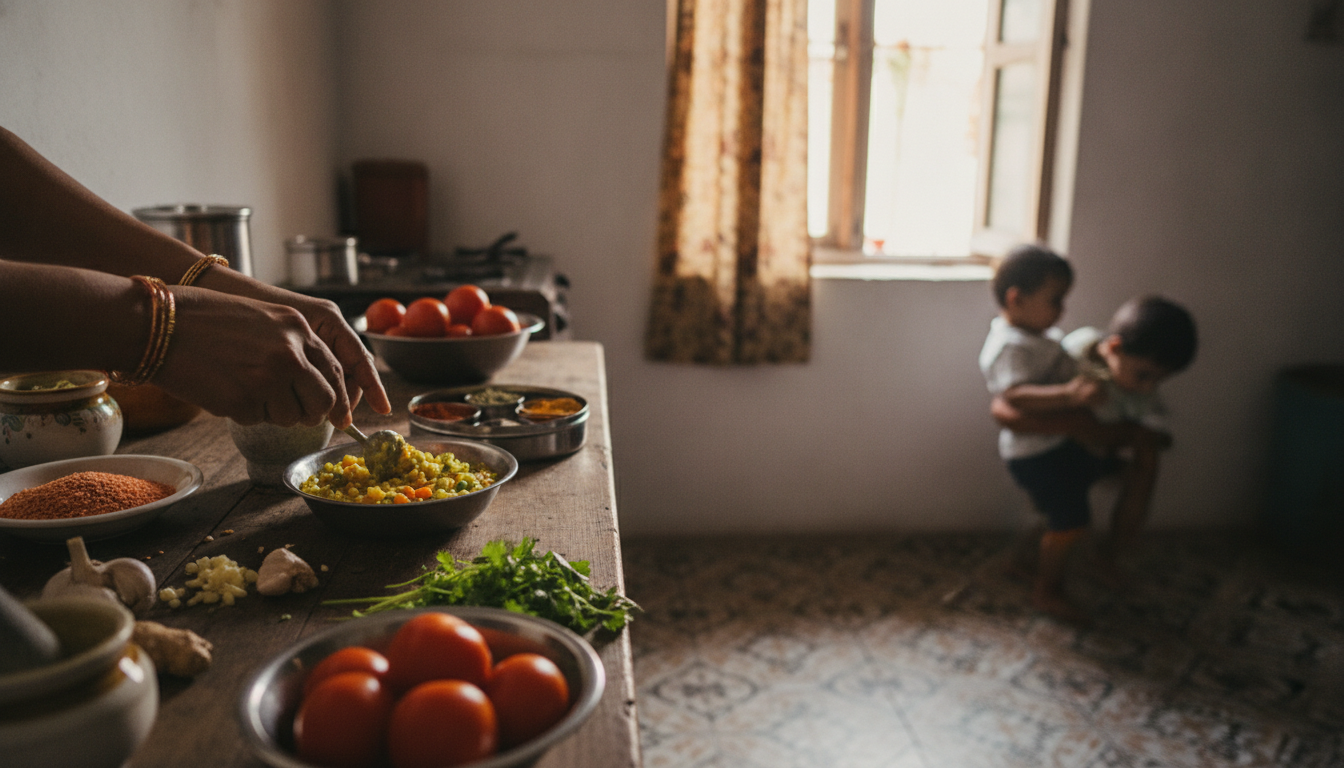
Should you add a pinch of salt or sugar to your baby’s food? For babies aged 6–23 months, the World Health Organization (WHO) says salt and sugars should not be added to complementary foods, and foods high in sugar or salt should be avoided. Indian Academy of Pediatrics (IAP) parent guidance says no extra salt in the first 12 months and no extra sugar in the first two years. These are related but not identical recommendations: the IAP age limits are its practical guidance, while WHO’s complementary-feeding guideline covers children aged 6–23 months. WHO guidance for infants and young children; IAP complementary-feeding guidance.
This does not mean avoiding nutritious foods that naturally contain sugars, such as whole fruit, or trying to eliminate sodium that occurs naturally in foods. The practical aim is to avoid adding salt or sweeteners and to limit highly salted or sugary products. Here’s how to apply that advice with familiar Indian meals.
What the guidance says—and who it applies to
Complementary foods are introduced alongside breast milk or infant formula, generally from around 6 months, when milk alone is no longer sufficient. WHO’s 2023 guideline applies to children aged 6–23 months. It recommends that foods high in sugar, salt and trans fats should not be consumed, and that sugar-sweetened beverages should not be consumed. WHO describes the evidence supporting these recommendations as low certainty, despite making a strong recommendation; this is not a claim that every small taste causes harm. WHO guideline for complementary feeding, 2023.
The IAP community guidance gives a straightforward household rule: no extra salt in the first 12 months and no extra sugar in the first two years. Families can cook a shared dish without added salt, take the baby’s portion out, and then season the remaining family food as needed. If your paediatrician has given individual advice—for example, because of a medical condition or growth concern—follow up with them about how it fits these general recommendations.
Why avoid adding salt?
Babies need nutrients for growth, but adding salt is not required to make complementary foods nutritious. Salty tastes can become familiar when offered repeatedly, and packaged savoury foods can contribute sodium without looking obviously salty. WHO recommends avoiding foods high in salt for children aged 6–23 months. The purpose is to make nutritious, lower-salt foods the everyday norm, not to alarm parents about a single accidental taste.
For babies under 12 months, IAP guidance specifically says not to add extra salt. After the first birthday, it remains sensible to keep salty packaged foods and heavily salted meals occasional or off the menu, consistent with WHO’s advice for ages 6–23 months. Avoid treating an adult’s salt target as a baby’s target: children’s needs differ by age and energy intake. WHO healthy-diet guidance.
Why avoid adding sugar?
Babies do not need sugar added to make food appealing or to provide a balanced meal. WHO recommends avoiding added sugars in complementary foods and avoiding foods high in sugar and sweetened drinks for ages 6–23 months. IAP guidance says no extra sugar in the first two years.
“Free sugars” is a broader term than spoonfuls of table sugar: WHO includes sugars added by a cook or manufacturer, and sugars naturally present in honey, syrups, fruit juice and fruit-juice concentrate. That does not mean the naturally occurring sugars in intact fresh fruit are the same as added sugar. Offer age-appropriate fruit as food rather than sweetening a meal or offering juice as a routine drink. WHO explanation of free sugars.
Sweetened foods and drinks can take the place of more nutrient-dense options. Frequent exposure to sugary drinks and foods is also a concern for dental health and unhealthy weight gain; the precise risk depends on a child’s overall diet and pattern of intake. Avoid presenting one food or one taste as a prediction of a child’s future health.
Hidden salt and sugar in everyday foods
“Baby food” or “homemade-style” on a label does not by itself tell you whether a product is high in salt or sugar. Check the ingredient list and nutrition information when choosing packaged food. Ingredients can include salt, sugar, jaggery, honey, syrup, or fruit-juice concentrate. A savoury product may contain salt even when it does not taste very salty to an adult.
- Watch for sweet biscuits, rusks, sweetened porridge mixes, desserts and flavoured drinks.
- Limit salty snacks, instant or packaged meals, stock cubes, seasoning mixes, pickles and salty sauces in a baby’s portion.
- Do not use honey as a sweetener for a baby under 12 months. Honey is also a free-sugar source under WHO’s definition.
- Do not assume fruit juice is equivalent to whole fruit. WHO says 100% fruit juice should be limited for children aged 6–23 months.
Product labels and recipes vary. The point is not to fear every packaged item, but to make simple foods without added salt or sugar the usual choice.
Everyday Indian foods can taste good without seasoning
Use ingredients and textures that are appropriate for your baby’s age and development. At around 6 months, complementary foods should be soft and easy to mash; progress texture as the child develops, while supervising eating. Examples might include well-cooked, mashed dal with rice; soft, mashed seasonal vegetables; or plain, unsweetened yoghurt if suitable for the child. Keep foods varied and nutrient-dense, and continue breast milk or formula as appropriate. Ask a health professional about individual feeding needs, allergies, or safe textures.
To add flavour without salt or sugar, try familiar ingredients such as well-cooked vegetables, lentils, or a small amount of an appropriate herb or spice in a family recipe. Introduce foods in a safe texture and watch the child while eating. Do not add whole nuts, hard pieces, or other choking hazards to make food more interesting.
Example 1: A family preparing khichdi can cook rice, dal and vegetables without salt, take out a soft portion for the baby, and then season the family pot separately. Mash the baby’s portion to a texture the child can manage.
Example 2: If an older relative offers sweetened porridge, parents can thank them and explain that they are following advice to avoid added sugar in the baby’s food. They might offer plain porridge with mashed fruit instead, if the texture and ingredients are appropriate for the child.
Practical checklist
- For babies under 12 months, do not add salt; IAP guidance advises no extra salt in the first year.
- Do not add sugar to complementary foods; IAP guidance advises no extra sugar in the first two years.
- Make the baby’s portion before adding salt, sugar, stock cubes or salty seasoning to a shared dish.
- Choose plain, unsweetened foods and check ingredient lists and nutrition panels on packaged products.
- Prefer soft, age-appropriate whole foods to sweet drinks or juice.
- Offer variety and let the baby explore natural flavours without pressure.
- Supervise meals and prepare foods in textures suitable for the child’s development.
Exceptions and when this does not apply
This article is general guidance for complementary feeding, not an individual meal plan. It does not mean that every food containing naturally occurring sodium or sugar must be excluded, or that a baby should receive an unnecessarily restrictive diet. Children with specific medical needs, growth concerns, feeding difficulties, or prescribed diets may need tailored advice. WHO’s recommendations discussed here apply to complementary feeding ages 6–23 months; IAP’s cited advice specifies no added salt in the first year and no added sugar in the first two years. Follow current advice from your child’s clinician for your own circumstances.
When to seek professional help
Ask your paediatrician or a qualified dietitian if you are unsure whether your baby is ready for a particular texture, is struggling to feed, has a restricted diet, has a relevant medical condition, or you are concerned about growth or nutrition. Seek urgent medical care if your baby is choking or has a severe reaction after eating. Do not use this article to diagnose an allergy or other health condition.
Frequently asked questions
Can I add a tiny pinch of salt to baby food?
IAP guidance says no extra salt in the first 12 months. WHO advises not adding salt to complementary foods and avoiding foods high in salt for ages 6–23 months. Cook without added salt and season the adult portion separately.
Can I sweeten porridge with jaggery or honey?
Do not add sweeteners to a baby’s complementary food. IAP advises no extra sugar in the first two years. Honey must not be given to babies under 12 months; ask your paediatrician if you have questions about a specific food.
Is sugar in fruit also something to avoid?
WHO’s term “free sugars” includes sugars in juice, honey and syrups, but not the sugars naturally present in intact fresh fruit. Offer suitable whole fruit in a safe texture rather than routinely serving juice or sweetening foods.
What if the baby refuses unsalted food?
Babies may need time and repeated, calm opportunities to become familiar with flavours. Offer a variety of suitable foods without force-feeding. If refusal is persistent or affects feeding or growth, discuss it with a health professional.
Should the whole family stop using salt?
Not necessarily. A practical option is to prepare the baby’s portion before seasoning the rest of the family meal. Keep highly salty foods away from the baby’s regular diet.
Conclusion
For babies beginning complementary foods, the practical message is simple: skip added salt and sugar, limit foods high in either, and offer varied, age-appropriate foods that let natural flavours come through. If your baby’s needs are individual, check with their paediatrician.
Looking for childcare support that fits your family’s schedule? Explore Zipnny’s nanny services and review the details before booking; families arrange care based on available time slots.
Related reading
- Explore Zipnny nanny services
- Explore available childcare booking options
- How to choose and supervise a nanny
This article is general information for families in India. It is not a medical diagnosis. Follow your paediatrician’s advice for your child.