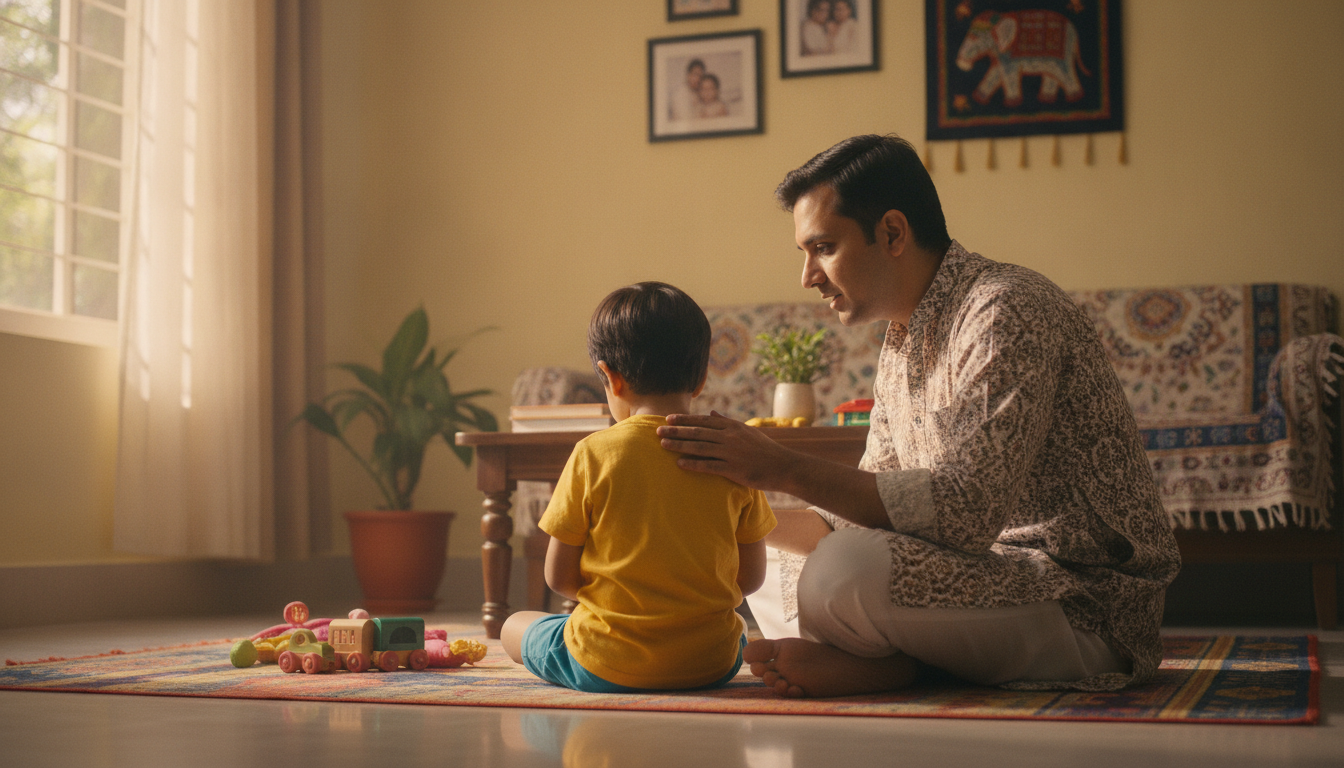
A child crying on a supermarket floor, refusing dinner or screaming when a parent leaves can leave any caregiver feeling judged and exhausted. Tantrums are common in early childhood, but a baby’s distress is not the same as a preschooler’s protest. Understanding what may be behind the behaviour helps adults respond safely without shaming or giving up necessary boundaries. This guide offers general education, not an assessment of an individual child.
Understanding the science of tantrums
A tantrum is an intense expression of distress or frustration. It may involve crying, shouting, dropping to the floor, kicking or throwing. “Meltdown” is an informal term often used when a child is overwhelmed; it is not a diagnosis. A tantrum alone does not establish a behavioural or developmental disorder. Look at the child’s age, situation, pattern and functioning between episodes.
Young children are still learning to communicate, wait, shift attention and manage strong feelings. When tired, hungry, frustrated or overwhelmed, a child may struggle to use skills they can show when calm. It is too simplistic to say the thinking brain “switches off”; the practical point is that lengthy reasoning is often ineffective during intense distress. Stay nearby, use few words, keep everyone safe and talk more after the child has settled. CDC guidance on noticing and naming emotions explains why adult support can help children learn to recognise and communicate feelings.
Tantrums are common in toddlers and become less common for many children as communication and coping skills develop, though children vary. A study of children aged 1–5 found tantrum frequency generally declined with age; its sample does not provide a diagnostic rule for an individual child. The study and its limitations are available in full text.
Age-wise explanation
- 0–6 months: Crying communicates needs or discomfort; it is not a deliberate tantrum. Check feeding, sleep, temperature, pain and the need for soothing.
- 6–12 months: Frustration, tiredness and separation distress may show as crying or protest. Babies still need an adult to regulate with them.
- 1–2 years: Mobility and independence grow faster than language and waiting skills. Limits and transitions can trigger strong reactions.
- 2–3 years: “I do it” meets limited impulse control. A child may understand a rule but not manage frustration consistently.
- 3–4 years: More language and imaginative play help, but fatigue, disappointment and transitions may still overwhelm.
- 4–6 years: Many children can discuss feelings and practise coping strategies, but stress, changes and unmet needs can still lead to outbursts.
Common triggers in Indian family life
Possible triggers include hunger, tiredness, illness, wanting a toy, stopping a mobile video, being hurried, separation from a parent, too much noise or company, changes in routine, wanting independence, difficulty explaining feelings and adult disagreement about rules. A child may protest when asked to eat or stop playing. Comparison with cousins, pressure from lessons or activities, and being told “no” repeatedly may add stress. These are possibilities, not universal features of Indian families; observe what happens before and after episodes.
Example 1: At a crowded family gathering, a toddler starts crying after being passed between relatives. The child may need a quieter space and familiar caregiver, rather than another demand to greet everyone.
Example 2: After school, a preschooler refuses dinner. The family can check whether the child is tired or hungry, offer a small predictable choice and avoid turning the meal into a contest.
Responses that can make things harder
Shouting, hitting, threats and humiliation can frighten children and model the very aggression adults want to stop. Physical punishment has documented risks; WHO reports that it carries risks of harm and no established benefit. WHO’s report on corporal punishment summarises the evidence. Repeatedly offering a phone, chocolate or a toy solely to end every protest may make that reward part of the pattern; however, a planned distraction for a young child is different from a bargain made under pressure. Giving in after setting a limit can make the limit less predictable. Ignoring feelings is not the same as calmly declining an unsafe or unreasonable demand.
Step-by-step: what to do during a tantrum
- Pause yourself. Take a breath, lower your voice and ask another adult to take over if you feel close to losing control.
- Make the space safe. Move objects, guide the child away from traffic or crowds, and calmly block hitting or throwing. Do not shake, hit or restrain a struggling child unless immediate safety requires a proportionate intervention.
- Get close, not confrontational. If appropriate, come to the child’s level while respecting their space.
- Name the feeling briefly. “You’re upset the video stopped. You wanted more.” This acknowledges emotion; it does not promise to reverse the limit.
- Use short sentences and hold the boundary. “I won’t let you hit. The phone is finished.” Avoid debating, lecturing or asking repeated questions while the child is overwhelmed.
- Offer comfort or a simple choice. “I’m here. Would you like a hug or space beside me?” For a manageable transition: “Walk to the car or hold my hand?”
- Reconnect and teach later. When calm, briefly discuss what happened, repair harm and practise a safer phrase or action. Do not demand an apology before the child is ready to understand.
Sample dialogue: “You wanted the toy. I know it’s disappointing. We’re not buying it today. You can help put it on the list or choose the next thing we need.”
15 everyday situations: try this
- Supermarket crying: Check hunger and tiredness; move to a quieter aisle. “You want the biscuits. We’re buying our list today. Help me find the bananas.”
- Demanding a mobile: Keep the agreed screen limit. “You want another video. Screen time is finished; shall we read or build?”
- Refusing dal, roti or vegetables: Avoid force-feeding. Offer familiar food alongside the meal and let the child decide whether and how much to eat; seek tailored advice for feeding concerns.
- Crying at school drop-off: Use a brief, predictable goodbye and coordinate with the teacher. “I’ll come back after school. One hug, then you go with teacher.”
- Not sharing with cousins: Protect turns without forcing sharing of every possession. “You’re using it. When your turn ends, cousin gets a turn.”
- Throwing things: Move breakable objects and set a clear limit. “I won’t let you throw. You can stamp your feet or squeeze this cushion.”
- Refusing sleep: Use a calm, repeatable bedtime sequence and offer two small choices. “Story first or pyjamas first?”
- Screaming in a mall: Reduce stimulation and step somewhere safer and quieter. “We’re taking a pause. I’m here.”
- Crying when parents leave for work: Use a reliable goodbye routine; do not disappear secretly. “I’m going to work. Nani will stay with you. I’ll see you later.”
- Refusing clothes: Allow age-appropriate choice within weather and safety limits. “Blue shirt or green shirt?”
- Hitting another child: Separate and attend to the hurt child. “I won’t let you hit. You were angry; say ‘move please’ or come get me.”
- Demanding chocolate: Keep the family rule without shaming. “You want chocolate. It isn’t part of this snack; you can choose fruit or yoghurt.”
- Refusing to stop playing: Give a clear warning and transition cue. “Five more minutes, then toys go away. Do you want to put away blocks or cars?”
- Tantrum in front of grandparents: Respond to the child, not the audience. “We’ll talk after everyone is calm; right now I’m keeping them safe.”
- Insisting on every toy: State the limit before entering the shop. “We’re not buying a toy today. You may look, then we’ll leave.”
Joint-family and working-parent challenges
Parents and grandparents can agree privately on a few shared rules: safety limits, screen routines, how to respond to hitting and what happens at bedtime. Caregivers need not use identical words, but predictable boundaries help. If relatives disagree, avoid arguing in front of the child; discuss it later with respect. Working parents can use a short, focused connection ritual after returning home, even when time is limited, and tell the caregiver about sleep, meals and changes in routine. In public, a simple “Thank you, we’re handling it” can help deflect judgment.
Prevention strategies and daily habits
There is no routine that prevents every tantrum. Try: consistent sleep and wake times; regular meals and snacks; outdoor movement where safe; predictable screen limits; stories and conversation; brief one-to-one attention; naming feelings; visual or verbal warnings before transitions; a few clear rules; age-appropriate choices; time to practise independence; calmer plans for crowded outings; breaks from overstimulation; coordination among caregivers; praise for specific helpful behaviour; and a simple, familiar bedtime routine. Adjust for the child’s health, family schedule and circumstances.
Age-wise parenting guide
- Under 1: Respond to cues, soothe and check basic needs; do not expect self-control.
- 1–2: Use redirection, simple words, safe exploration and immediate limits.
- 2–3: Prepare for transitions, offer two acceptable choices and practise simple feeling words.
- 3–4: Rehearse coping phrases when calm and keep routines and consequences predictable.
- 4–6: Involve the child in problem-solving after calm returns; practise asking for help, taking turns and repairing harm.
When to seek professional help
Talk with a paediatrician or qualified child mental-health professional if outbursts are very frequent, prolonged or escalating; involve repeated self-injury or serious aggression; interfere substantially with home, school or relationships; or occur alongside concerns about communication or development. A clinician can consider the whole picture, including health, language, sleep, stress and developmental history. Tantrums alone do not diagnose a condition. Seek urgent help for immediate danger or serious injury. AACAP guidance on tantrums and assessment describes situations in which families should seek help.
Practical checklist
- Daily routine: Wake, meals, play, quiet time and bedtime in a broadly predictable rhythm; adapt to your household.
- Feelings chart: Use simple faces or words such as happy, sad, angry, scared and tired. Ask, “Which one feels closest?”
- Positive language: Say what to do: “Feet on the floor,” rather than only “Don’t jump.”
- 20 helpful phrases: “I’m here”; “You’re safe”; “You seem upset”; “I hear you”; “You wanted more”; “It’s hard to stop”; “I won’t let you hit”; “Let’s move somewhere quiet”; “Take your time”; “Would you like a hug?”; “Would you like space?”; “You can point”; “Use words when you’re ready”; “Let’s breathe together”; “First shoes, then outside”; “Blue or green?”; “I’ll help you”; “We can try again”; “You’re calm now”; “Let’s fix what got hurt.”
- Avoid saying: “Stop crying or I’ll hit you”; “You’re bad”; “Shame on you”; “Big boys don’t cry”; “I don’t love you”; “I’m leaving you”; “You’re useless”; “Why can’t you be like your cousin?”; “You always ruin everything”; “Nobody likes you”; “Don’t be a baby”; “I’ll give you away”; “You’re crazy”; “I’ll call the police”; “You’re doing this to make me suffer”; “I’ll never speak to you”; “You should be ashamed”; “You’re naughty”; “I’ll hit you harder”; “There’s nothing to cry about.” Replace threats and labels with a calm limit and help.
- Observation tracker: Note date/time, what happened before, sleep/food, behaviour, approximate duration, adult response and what helped. Look for patterns, not blame.
- Parent self-check: Is everyone safe? Am I calm enough to respond? Can I lower my voice, use fewer words, keep the limit and ask another adult for help?
Exceptions and when this does not apply
These strategies are general, not a substitute for medical advice. Crying in babies deserves attention to their needs, not punishment or expectations of discipline. A child with communication differences, sensory needs, illness, pain, trauma or other individual circumstances may need a tailored approach. If a child is in immediate danger, prioritise safety and seek appropriate help.
Frequently asked questions
Are tantrums normal in children aged 0–6?
Tantrums are common in toddlerhood and may continue in preschool years. Infant crying is better understood as communication than as a tantrum. Patterns vary, so age alone cannot determine whether a child needs support.
Should I ignore a tantrum?
Do not ignore danger, injury or a child who needs comfort. You can avoid rewarding a demand while remaining close, calm and attentive to safety.
Will comforting my child spoil them?
Comforting a distressed child does not require giving in to the demand. Acknowledge the feeling while maintaining a reasonable boundary.
What if grandparents respond differently?
Agree on a few important rules privately and explain that consistency helps the child know what to expect. Respectful discussion is more useful than correcting one another during an outburst.
When should we get advice?
Ask a paediatrician or child-development professional when tantrums are intense, persistent, unsafe or significantly disrupting everyday life, or when you have communication or developmental concerns.
Key takeaways for Indian parents
Tantrums are communication and distress, not proof that a child is bad or a parent has failed. Check likely needs, keep the child safe, acknowledge feelings, hold clear boundaries and teach skills after calm returns. Consistent, respectful caregiving across parents, grandparents and other caregivers can make expectations easier to understand. If the pattern worries you, ask a professional rather than trying to diagnose it at home.
Looking for childcare support that fits your family's schedule? Explore the nanny services available through Zipnny and review the details before booking. Families book available time slots; availability is not guaranteed immediately. Explore Zipnny nanny services and download the app to book an available slot.
Related reading
This article is general information for families in India. It is not a medical diagnosis. Follow your paediatrician’s advice for your child.