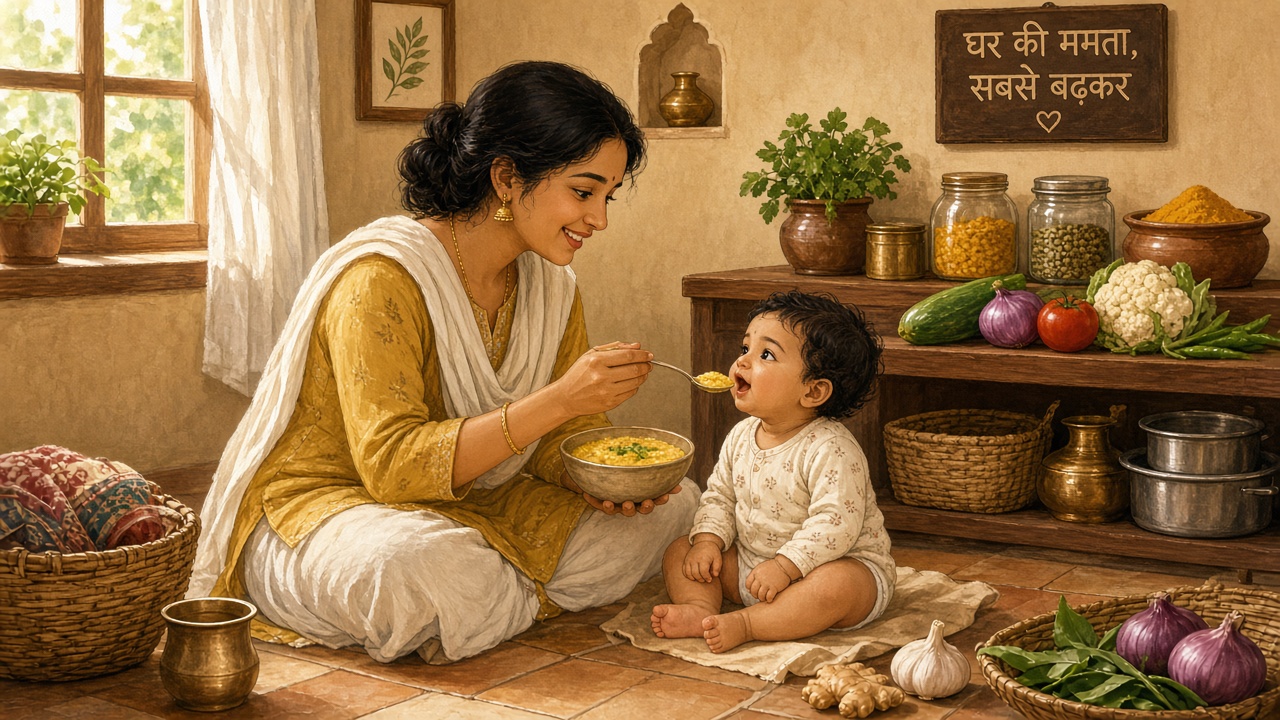
For the first six months of life, breast milk or appropriate formula provides everything a baby needs. Around the six-month mark, a baby's nutritional requirements—especially for iron and zinc—begin to outpace what milk alone can supply. This is when complementary feeding should begin.
The World Health Organization's 2023 complementary feeding guideline recommends introducing solid foods at six months of age while continuing breastfeeding up to two years or beyond. This article explains what Indian parents need to know.
Why six months—not earlier, not later
Before six months, a baby's digestive system, kidneys, and swallowing coordination are not ready for food. Starting too early increases the risk of infections and allergies. Starting too late can lead to iron deficiency and difficulty accepting new textures.
Signs of readiness (all should be present):
- The baby can sit upright with support and hold their head steady.
- They show interest in food—reaching for it, watching you eat, opening their mouth.
- The tongue-thrust reflex (pushing food out with the tongue) has diminished.
- They can close their lips around a spoon.
If your baby was born prematurely, discuss timing with your paediatrician. Readiness depends on developmental age, not just calendar age.
What to feed: the first foods
There is no single correct "first food." The WHO guideline emphasises diversity. Indian kitchens already have excellent options:
- Dal water progressing to mashed dal — moong dal or masoor dal, cooked soft and mashed. A reliable source of protein and iron.
- Khichdi — rice and dal cooked together with a little ghee. Start with a thin, smooth consistency and thicken over weeks.
- Mashed roti or chapati — soaked in dal or milk, mashed until smooth.
- Cooked and mashed vegetables — lauki (bottle gourd), sweet potato, carrot, pumpkin. Soft enough to press between your fingers.
- Mashed banana, chikoo (sapota), papaya — naturally soft fruits that require no cooking.
- Boiled and mashed egg — where the family eats eggs. Start with a small amount of yolk. Egg is an excellent source of protein, iron, and choline.
- Ragi (finger millet) porridge — high in calcium and iron. Cook the flour thoroughly to remove the raw taste.
Iron-rich foods: why they matter most
A baby's iron stores from birth begin to deplete around six months. The WHO complementary feeding guideline specifically highlights the importance of iron-rich animal-source foods and iron-fortified foods.
Good iron sources in the Indian diet:
- Egg yolk (and later whole egg)
- Well-cooked and finely mashed chicken or fish (where the family eats these)
- Cooked and mashed dal and legumes (rajma, chana, moong)
- Ragi porridge
- Green leafy vegetables (palak, methi) — cooked and pureed
Pair iron-rich foods with vitamin C sources (tomato, lemon, amla, orange) to improve iron absorption. Avoid giving tea or coffee to babies and toddlers, as the tannins block iron uptake.
Textures: from smooth to lumpy to finger food
Start with smooth purees and mashed food. By 8–9 months, move to soft lumps, minced food, and foods the baby can pick up. By 12 months, most babies can eat the family's meal in a modified form.
Staying on purees too long can make the transition to textured food harder. The WHO recommends increasing texture progressively—not waiting until the child has teeth.
- 6–7 months: Smooth purees, well-mashed food. 2–3 tablespoons per meal, 2–3 meals a day.
- 8–9 months: Mashed food with soft lumps, small finger foods (pieces of soft roti, banana, paneer). 3 meals plus 1–2 snacks.
- 10–12 months: Finely chopped family food, soft finger foods. 3 meals plus 1–2 snacks.
- 12–24 months: Family food, cut appropriately. 3 meals and 2 snacks.
Responsive feeding
Responsive feeding means paying attention to the child's hunger and fullness signals. The WHO guideline recommends:
- Feed the baby directly and assist older children. Do not leave them to eat alone.
- Feed slowly and patiently. Encourage eating but do not force.
- If the child refuses many foods, experiment with different combinations, tastes, and textures.
- Minimise distractions during meals—turn off the television and put phones away.
- Talk to the child during feeding. Meal time is also learning time.
Force-feeding, distraction feeding (with cartoons), and coaxing a child who is clearly full are common practices that research links to unhealthy eating patterns later in life.
Choking hazards: what to avoid
Choking is a real risk. The following foods are unsafe in their whole or raw form for babies and toddlers:
- Whole nuts and seeds (grind them into powder or paste)
- Whole grapes and cherry tomatoes (cut lengthwise into quarters)
- Raw carrot sticks, apple slices (cook until soft)
- Popcorn
- Hard candy, chewing gum
- Large chunks of meat (shred or mince finely)
- Sticky foods like large spoonfuls of peanut butter
Always supervise your child while they eat. Seat them upright. Learn infant choking first aid—your paediatrician or a certified first-aid course can teach this.
Foods to avoid in the first year
- Honey — risk of infant botulism. Not safe before 12 months.
- Salt — a baby's kidneys cannot process added salt. Use no salt in baby food. The family dal can be set aside before salting.
- Sugar and jaggery — no added sweeteners are needed. Fruit provides natural sweetness.
- Whole cow's milk as a main drink — can be used in cooking, but should not replace breast milk or formula as the main milk source before 12 months.
- Fruit juice — whole fruit is always better. Juice fills the stomach without the fibre.
- Packaged baby biscuits and cereals marketed as "health foods" — often high in sugar. Read the label.
Allergies: what the evidence says
Current evidence does not support delaying common allergens. The WHO and most paediatric bodies now recommend introducing allergenic foods (egg, fish, peanut in an age-appropriate form, wheat, dairy) at around 6 months along with other foods. Delaying them has not been shown to prevent allergies.
Introduce one new food at a time, wait 2–3 days, and watch for reactions such as rash, vomiting, or diarrhoea. If your family has a strong history of food allergies, discuss the plan with a paediatrician first.
Practical Indian meal ideas by age
6–7 months:
- Mashed moong dal with a drop of ghee
- Ragi porridge (cooked thin)
- Mashed banana or stewed apple
- Mashed boiled sweet potato
8–9 months:
- Khichdi (rice + dal + mashed vegetable)
- Mashed idli with sambar (mild, no chilli)
- Soft dosa pieces with dal
- Mashed boiled egg
- Curd rice (homemade curd)
10–12 months:
- Soft chapati pieces with dal or vegetable
- Upma with vegetables
- Rice with rasam and mashed vegetable
- Paneer cubes (soft, small)
- Small pieces of well-cooked chicken or fish
When to see a doctor
- The baby consistently refuses all food after several weeks of trying.
- There is significant weight loss or failure to gain weight.
- Persistent vomiting, diarrhoea, or allergic reactions after feeding.
- You suspect iron deficiency (pallor, extreme tiredness, poor appetite).
Sources
- WHO. Guideline for complementary feeding of infants and young children 6–23 months of age. Geneva: World Health Organization; 2023.
- UNICEF India. Nutrition resources for the first 1,000 days.
- Ministry of Health and Family Welfare, Government of India. National guidelines on infant and young child feeding.